← All guides
Is a Vehicle History Report Worth It?
Yes, when buying a used car. A vehicle history report flags salvage, flood, lemon, and odometer fraud for a small fraction of the car's price.
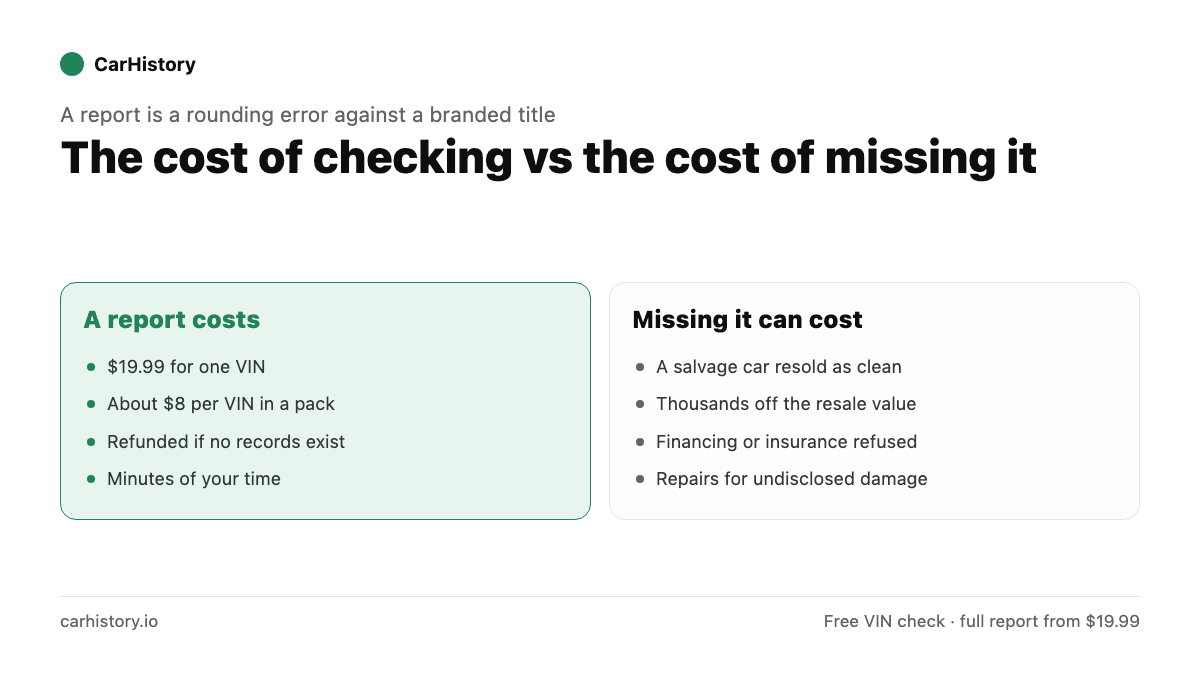
Yes, a vehicle history report is worth it whenever you are buying a used car. For a small fraction of the car’s price, it surfaces hidden problems a test drive can’t show you: a salvage or flood title, a lemon-law buyback, an odometer rollback, or open recalls. One catch caught is usually worth hundreds or thousands of dollars in avoided repairs or lost resale value.
What a paid report tells you that a free VIN check can’t
A free VIN check is a great starting point. It decodes the VIN, confirms the year, make, model, and trim, and verifies the number is valid. That tells you the car is what the seller claims it is. What it usually does not tell you is what happened to that specific car over its life.
A paid vehicle history report goes deeper because it combines records from multiple national sources into one de-duplicated report. Drawing on insurance, salvage, title, auction, service, and motor-vehicle records, it can reveal:
- Title brands such as salvage, rebuilt, flood, or junk
- Reported accidents and total-loss events
- Odometer readings over time, so a rollback stands out
- Lemon-law buybacks and manufacturer repurchases
- Past use as a rental, fleet, or taxi vehicle
- Open safety recalls that were never repaired
That is the gap a free check leaves open, and it is exactly where the expensive surprises hide.
The real cost of skipping a report
The price of a report is small. The cost of skipping one can be enormous.
Buy a car with a hidden salvage or flood title and you have purchased something an insurer already declared a total loss. Flood cars in particular look fine on the lot, then develop electrical gremlins and corrosion for years. Resale value is permanently cut, and some lenders and insurers treat branded titles differently.
A hidden lemon-law buyback means a manufacturer already repurchased the car for defects it could not fix. An odometer rollback makes a high-mileage car look gently used, so you overpay and face wear you didn’t budget for. None of these show up in a quick inspection or a glance at the dashboard, and a friendly seller may not even know about them. A report is the cheapest way to find them before money changes hands. See how to spot an odometer rollback and what is a salvage title for the details.
Think of the math this way. A report costs a few dollars. A single undisclosed accident or a flood title can knock thousands off resale value, and a serious mechanical problem can cost more than the car is worth. You do not need a report to find a problem every time for it to pay off. You only need it to catch one expensive car among the many you look at, and over a normal search that is a very good bet.
When a report is most worth it
A report pays for itself most clearly in these situations:
- Private-party sales. There is no dealer reputation on the line and no lot inspection, so the records are your main protection.
- Older vehicles. More years on the road means more chances for an accident, title brand, or missed recall to be sitting in the history.
- Big-ticket buys. The more you are spending, the more a small report fee makes sense as insurance against a costly mistake.
- Thin seller documentation. No service records, a vague backstory, or a title that was just transferred are all reasons to verify the history yourself.
If any of these describe your purchase, a report is one of the highest-value few dollars you can spend in the whole process. For a deeper look at where the data comes from, read how vehicle history reports work.
How CarHistory keeps it low-risk
We built CarHistory so that running a report is an easy decision, not a commitment.
- Pay per report with credits. You buy credits and spend one when you pull a report. There is no subscription, no recurring bill, and nothing to cancel later. See pricing for the current rates.
- No-data, no-charge guarantee. If we search the national vehicle-history databases and find no records for a VIN, your credit is refunded automatically. You only pay when there is something to show you.
That means the downside of checking is essentially zero. You either get a useful report, or you get your credit back.
Run the numbers for yourself
Want to see what’s on file before you commit? Start with a free VIN check to confirm the basics, then preview a full sample report to see the depth of records before you buy.
A few dollars and two minutes now can save you from a car you’d regret for years, so it’s hard to argue a report isn’t worth it.
Start with a free VIN check and see what comes back.
Sources
- NICB VINCheck — NICB states plainly that its free check “is not a comprehensive vehicle history report” — useful context when weighing free against paid.
- NMVTIS (U.S. Department of Justice) — Federal title, brand and odometer records.
Check your vehicle's history