← All guides
How to Check a Used Car for Flood Damage
Learn how to spot a flood damaged car, the physical signs to inspect, and how to check title brands and history by VIN before you buy.
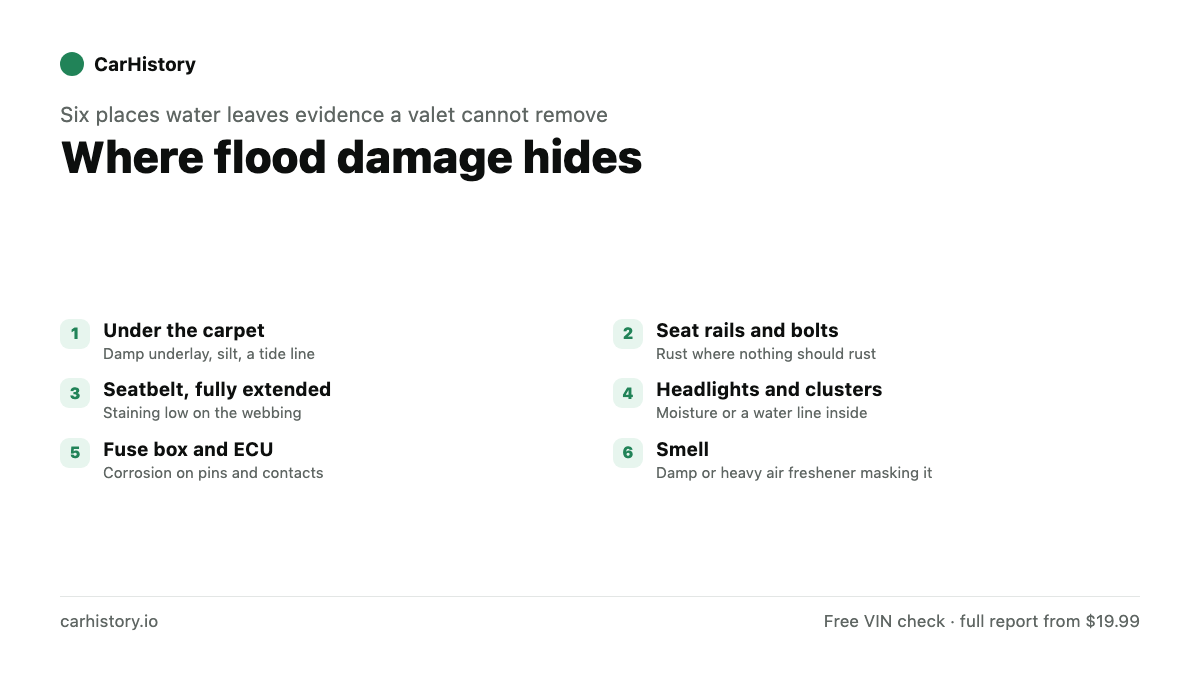
A flood damaged car is a vehicle that has been submerged or soaked deeply enough to harm its engine, electronics, or safety systems. To check for one, inspect for water stains, musty odors, rust, and silt in hidden areas, then run the VIN to look for flood or salvage title brands and water-damage records before you buy.
Why Flood-Damaged Cars Are Dangerous
Water is brutal on a modern vehicle. Even after a car dries out and looks clean, the damage often keeps spreading for months or years. Flooding is dangerous for several reasons:
- Corroded electronics. Today’s cars rely on dozens of computers and wiring harnesses. Floodwater corrodes connectors and circuit boards, causing failures in airbags, anti-lock brakes, power steering, and stability control.
- Compromised safety systems. Airbag sensors and seatbelt pretensioners can fail silently. You may not know until a crash that they no longer work.
- Hidden rust. Water trapped under carpets, in frame rails, and inside doors rusts metal from the inside out, weakening the structure over time.
- Engine and transmission damage. If water enters the engine, internal corrosion and bearing failure can follow.
- Mold and health risks. Saturated upholstery and insulation grow mold that is hard to fully remove.
The worst part is deception. Some sellers clean up flooded cars, move them to another state, and resell them without disclosing the history. That is why a careful inspection plus a VIN check matters so much.
Physical Signs of Flood Damage to Inspect
Bring a flashlight and use your nose. Flood cars hide their past in places most buyers never look.
Look
- Water lines or silt stains on the inside of the trunk, glove box, and under the dashboard.
- Mud, sand, or debris in odd places: under the seats, in the spare-tire well, behind kick panels, or in seatbelt retractors.
- Rust on screws, hinges, seat tracks, door latches, and under-dash brackets that should look new on a low-mileage car.
- Mismatched or brand-new carpet and upholstery in an otherwise older or worn vehicle.
- Fogging or moisture inside headlights, taillights, and the instrument cluster.
- Discolored or corroded wiring and connectors under the dashboard and in the engine bay.
Smell
- A strong musty, mildew, or moldy odor, especially when the car has been closed up.
- An overpowering air-freshener or cleaning-product smell, which can mask the real problem.
Touch and Test
- Pull back carpet edges and feel the padding underneath for dampness or grit.
- Run every electrical feature: windows, locks, lights, wipers, infotainment, heated seats, and gauges. Intermittent glitches are a red flag.
- Check the oil dipstick and coolant for a milky color that can indicate water contamination.
No single clue is proof, but several together strongly suggest water damage.
Check Title Brands and History by VIN
A physical inspection catches a lot, but the cleanest-looking car can still have a hidden flood past. Your strongest tool is the 17-character VIN, which ties a vehicle to its recorded history across data sources.
A flooded car often carries a title brand, an official designation that follows the vehicle. Watch for these:
- Flood or water damage brands.
- Salvage, which an insurer may assign after a flood total loss.
- Junk or rebuilt, depending on the state and what was done after.
To learn how branding works in detail, read Title Brands Explained and What Is a Salvage Title?. Be aware that some owners move a car to a new state to “wash” the title, so a clean title alone is not a guarantee. That is why combining sources matters.
Start with a free VIN check to confirm the year, make, and model and to see how many history records exist for the vehicle. If you want the full picture, a paid report unlocks accidents and damage, title brands including flood and salvage, odometer readings, ownership history, and more. CarHistory combines records from multiple national databases into one de-duplicated report, so a flood record sitting in only one database is less likely to slip past you. See an example in the sample report, and review pricing before you buy.
Step-by-Step: Vetting a Used Car for Flood Damage
- Find the VIN on the dashboard, driver’s door jamb, or vehicle paperwork. New to VINs? See How to Read a VIN.
- Run a free VIN check to confirm the vehicle and see how many history records exist.
- Pull a full report to check for flood, water-damage, and salvage title brands across multiple national data sources.
- Inspect the car in person using the look, smell, and touch checks above.
- Test-drive and watch for electrical glitches, warning lights, and unusual smells.
- Get a trusted mechanic to inspect it on a lift, focusing on corrosion and electrical connectors.
For the bigger picture on buying safely, work through the Used Car Buying Checklist.
What If the History Looks Clean?
A clean report is reassuring, but not absolute. Records depend on what was reported and to whom. A flood that was never filed with an insurer or a title office may leave little trace. Treat the VIN history and the physical inspection as two halves of one decision, and walk away from any car where the seller dodges questions or rushes you.
If your VIN turns up no data at all, do not assume the worst right away. See VIN Not Found? What It Means and What to Do for the likely reasons and next steps.
Before you hand over any money, run a free VIN check to see what the vehicle’s history reveals.
Sources
- NICB VINCheck — Free check for flood, salvage and theft records reported by participating member insurers.
- NMVTIS (U.S. Department of Justice) — Federal title system carrying flood and other brands across state lines.
Check your vehicle's history