← All guides
The Used Car Buying Checklist
A step-by-step used car buying checklist covering budget, inspection, test drive, and pulling a VIN history report before you pay or sign anything.
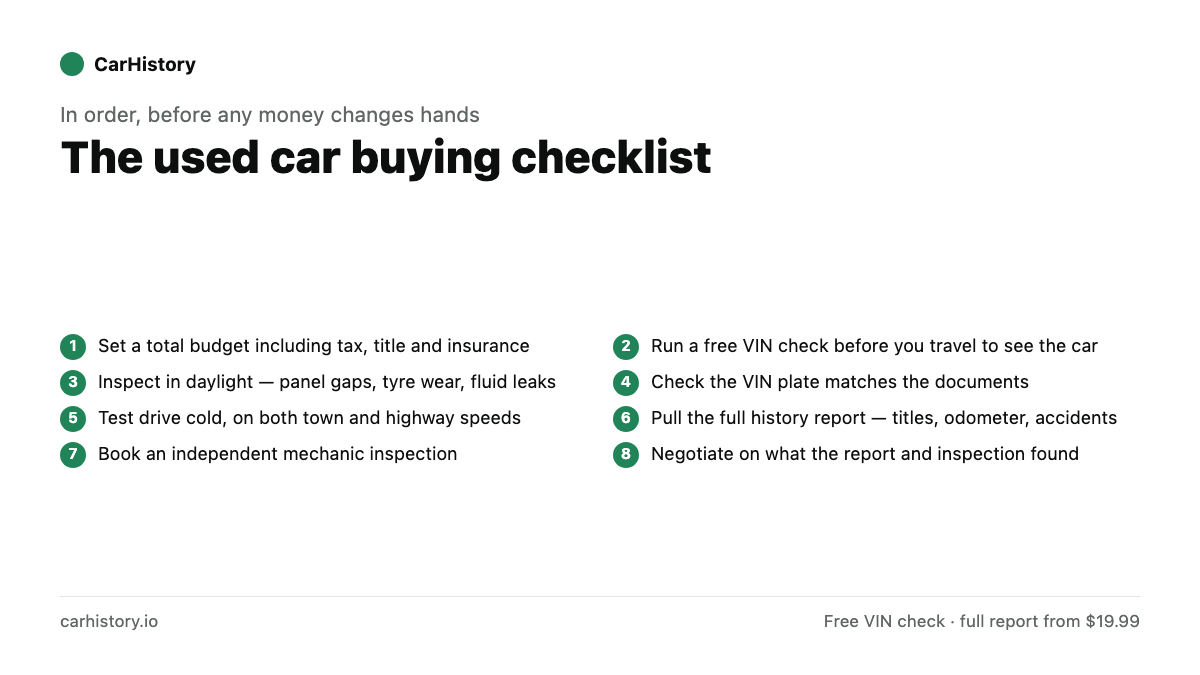
The used car buying checklist is a step-by-step process for evaluating a vehicle before you buy: set a budget, research the model, inspect the car and its documents, run a vehicle history report by VIN, take a test drive, get a mechanic’s inspection, then negotiate and close the deal. Following each step in order helps you avoid costly hidden problems.
Before you shop: set your budget and target
Start with the numbers, not the car. A clear budget keeps you out of impulse buys and gives you leverage when you negotiate.
- Decide your total out-the-door budget, including tax, title, and registration fees.
- Factor in ongoing costs: insurance, fuel, expected maintenance, and likely repairs.
- Pick two or three models known for reliability in your price range so you have options.
- Leave a cushion for surprises an inspection might uncover.
Inspect the listing and the documents
Once you find a candidate, look past the photos. The paperwork tells you who owned the car, how it was titled, and whether the seller is being straight with you.
- Confirm the seller’s name matches the title and registration.
- Check that the VIN on the title matches the VIN on the dashboard and door jamb.
- Watch for a title brand such as salvage, rebuilt, or flood — these change a car’s value and safety. Our guide on title brands explained breaks down what each one means.
- Ask for service and repair records, especially for big-ticket items like timing belts or transmissions.
If you are not sure how to read the 17-character VIN itself, see how to read a VIN to decode the make, model year, and plant of manufacture.
Run a vehicle history report by VIN
This is the step buyers skip most often, and it is the one that catches the most expensive surprises. A photo cannot show you a hidden accident, a washed title, or an odometer that was rolled back. The VIN can.
Start with a free VIN check to confirm the year, make, and model and to see how many history records exist for the car. If records are there, a full report unlocks the details that matter:
- Accidents and damage — collisions, structural damage, and airbag deployments.
- Title brands — salvage, flood, lemon, and junk designations from any state.
- Odometer readings — a timeline that flags possible odometer rollback.
- Ownership history — how many owners, and whether it was a personal, rental, or fleet vehicle.
- Open recalls and service records — safety work that may still be outstanding.
- History Score — a single number that summarizes the vehicle’s history.
CarHistory combines records from multiple national databases into one de-duplicated report, so you see everything those sources know without buying multiple reports or cross-checking them yourself. If you want to know how these reports are built, read How Vehicle History Reports Work. You can preview the format in our sample report before you spend anything, and our pricing is built around per-report credits rather than subscriptions.
A clean report is not a guarantee, but a report full of red flags is reason enough to walk away.
Take the test drive
Numbers and records only go so far. Driving the car tells you how it actually behaves.
- Start the engine cold if possible — listen for knocking, hard starts, or excess smoke.
- Test brakes, steering, and acceleration on different road types.
- Check that every electronic feature works: windows, lights, climate, infotainment, and warning lights.
- Notice any pulling, vibration, or unusual noises at speed.
Get an independent inspection
Before money changes hands, have a trusted mechanic look the car over. A pre-purchase inspection usually costs far less than the first repair you would have missed.
- Ask the mechanic to check the frame, suspension, fluids, and tire wear.
- Have them scan for stored fault codes that may not trigger a dashboard light.
- Use any findings as leverage to lower the price or to walk away.
If the seller refuses an inspection, treat that as a warning sign on its own.
Negotiate and close
With your research, history report, and inspection in hand, you can negotiate from facts instead of feelings.
- Base your offer on documented issues, comparable listings, and the car’s history.
- Confirm the title is clean and signed correctly before you pay.
- Get a bill of sale, and make sure odometer disclosure is recorded.
- Keep copies of everything for registration and your own records.
What if the VIN turns up nothing?
Sometimes a VIN returns little or no data — common with very new cars or vehicles new to the country. That is not always a red flag, but it means you should lean harder on the inspection and documents. Our guide on what a free VIN check can show you, plus VIN not found? What it means and what to do, explains how to proceed. With CarHistory, if a paid report finds no data, your credit is refunded automatically — you are never charged for an empty report.
Quick recap
Work the checklist in order: budget, research, document and listing review, a VIN history report, test drive, independent inspection, then negotiate and close. The VIN report is the cheapest insurance in the whole process.
Ready to vet your next car? Run a free VIN check and see what the records reveal before you go any further.
Sources
- Buying a Used Car From a Dealer — Federal Trade Commission — The FTC’s Used Car Rule and the Buyers Guide a dealer is required to display.
- NMVTIS (U.S. Department of Justice) — Federal title and brand records behind a vehicle’s paperwork.
- NICB VINCheck — Free lookup for insurance-reported theft, salvage and flood records.
Check your vehicle's history